The Weather Team Next Door: Local TV's Streaming Bet Is Personal
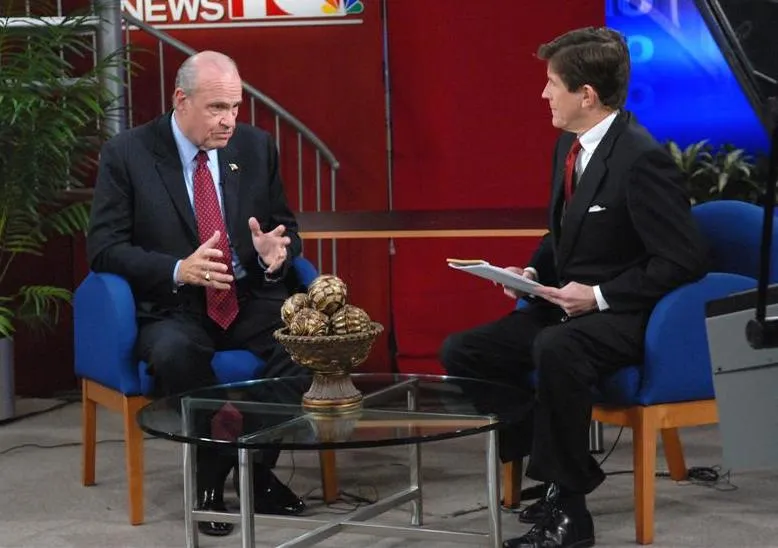
Photo: freddthompson, CC BY-SA 2.0, via Wikimedia Commons
Your local anchor is no longer just the person who tells you about the storm while you are still in bed. They are the person on your Roku at 7:42 p.m., walking through a school board vote, a Friday night football score, and a weather model that actually includes your neighborhood. Local television has found a new screen, and it is not pretending the old one is enough.
For years, stations treated streaming like a shelf for old newscasts. Clip the package, post the weather segment, call it digital. That was not a strategy. It was a filing system. Now local broadcasters are launching FAST channels and hyperlocal feeds built around the things national streaming cannot do: the bridge closure on Route 9, the high school playoff run, the city council meeting that runs past 10 p.m.
The anchor becomes a streaming native
The job is changing. A local anchor on a streaming channel cannot just read the same script with a different logo behind them. They have to host. They have to explain. They have to be specific enough that a viewer in the next town over understands why this matters here. That is a different skill than filling a 22-minute broadcast.
The best local streaming experiments look less like a newscast and more like a town square with a camera. Weather teams do longer explainers. Sports desks own Friday night. City hall reporters turn a zoning fight into a five-minute story that actually makes sense. The anchor is the guide, not the whole product.
Why FAST channels fit local TV
FAST distribution is cheap. Stations already have weather data, archives, sports footage, and a sales team that knows the local car dealer and the hospital system. A local weather channel can run all day. A high school sports channel can run Friday and replay all week. A city hall feed can be boring and still be useful. That is not a glamorous business, but it is a real one.
National streamers cannot replicate this at scale. They can give you a weather app. They cannot give you the sense that someone in your market knows the difference between the north side and the airport. Local TV has been losing that advantage on cable. Streaming gives it back, if stations use it well.
The midterms were the test
The 2026 midterms just wrapped, and local broadcasters had a chance to prove they can do live, trustworthy coverage that national feeds cannot. Some did. They streamed candidate forums, explained ballot questions, and put local race results next to the national map. The lesson was not that local news is small. It is that local news is specific. Specific is a feature.
But a channel that only shows up every two years is not a habit. The post-election test is whether stations keep the hyperlocal feed alive when the ads are not political and the stakes are a school budget instead of a Senate seat. That is harder. It is also the whole point.
The trap: do not just move the newscast
If the streaming channel is the same 6 p.m. show with a different logo, viewers will not stay. Local streaming has to be built for the platform. Shorter segments. On-demand weather. Replayable sports. Community announcements. A anchor who can talk to the audience without it feeling like a telethon.
That means stations need to stop treating streaming as a overflow bin and start treating it as a product. The evening news ritual is not dead. It is changing. The 6 p.m. broadcast may become a 6 p.m. habit plus an all-day feed. The anchor becomes a streaming star not because they are famous, but because they are useful.
That is not glamorous. It is essential. And essential is a pretty good streaming strategy.