The FOMO Effect: Why Live TV Is Making a Roaring Comeback in the Streaming Age
Opinion: The Pause Button Can't Save You From Missing Out
Let me tell you about the worst way to watch a major awards show. You record it, you avoid social media all evening — which in 2024 requires a level of digital discipline that borders on the monastic — you sit down at 10 p.m. to watch, and within thirty seconds your phone buzzes with a text from your sister that says, and I quote: "Can you BELIEVE what just happened???"
Game over. The moment is gone.
This is the core tension at the heart of how Americans are watching television right now, and it's driving a shift that the industry didn't entirely see coming. After years of celebrating the death of appointment television — we have DVRs! We have on-demand! We watch on our schedule! — live programming is staging a genuine comeback, and the streaming platforms that were supposed to make linear TV irrelevant are the ones now scrambling to host it.
The Numbers Don't Lie
The data has been telling this story for a couple of years now, and it's getting harder to dismiss. Super Bowl LVIII on CBS and Paramount+ in February 2024 drew an average audience of 123.4 million viewers, the most-watched television broadcast in American history. The Oscars, despite years of hand-wringing about declining relevance, consistently trend globally on social media in ways that no prestige streaming drama has ever replicated. And reality competition finales — The Voice, Survivor, Dancing with the Stars — routinely generate the kind of synchronized audience engagement that algorithms can't manufacture after the fact.
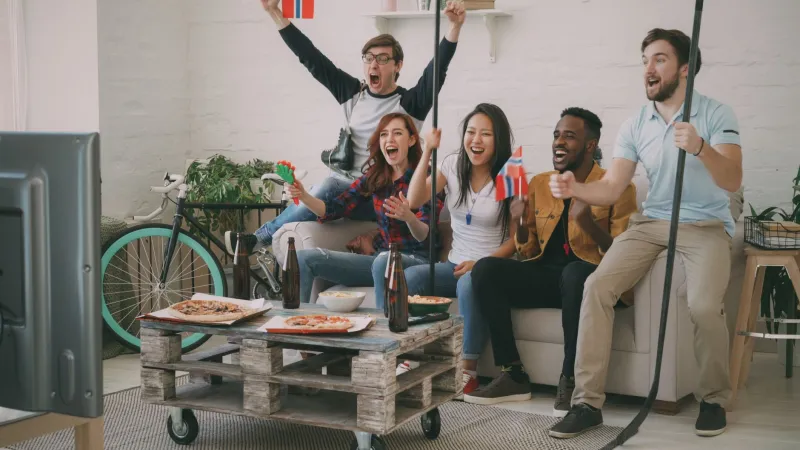
Live viewership creates something that on-demand content fundamentally cannot: a shared cultural moment in real time. The collective gasp, the group chat explosion, the Twitter (fine, X) thread that's actually happening right now rather than six months after you finally got around to watching the thing everyone told you to watch.
"There's a social dimension to live viewing that we underestimated when we were all excited about binge culture," says a producer who has worked on both network reality competitions and streaming originals. "Streaming gave people freedom, but it also isolated the experience. Live TV is inherently communal, even when you're watching alone."
Streaming Platforms Are Paying Attention
If you want to understand where the industry thinks this is going, follow the rights deals. Amazon paid $1 billion per year for Thursday Night Football. Apple TV+ grabbed Major League Baseball. Peacock outbid everyone for exclusive streaming rights to a Super Bowl and a slate of Premier League soccer matches. Netflix — the company that built its entire identity on the idea that you watch what you want, when you want — is now in the live sports and events business, having secured WWE Raw and a roster of live comedy specials designed to be watched as they happen.
These are not small bets. These are massive, multi-year financial commitments from companies that spent years arguing that the future of television was on-demand. The pivot toward live content isn't a concession — it's a recognition that live programming solves a problem that streaming has quietly struggled with: subscriber churn.
When a platform has a live event that people genuinely don't want to miss, they subscribe for it. And if the platform is smart about building a content ecosystem around that live anchor, some of those subscribers stick around. Live programming is, among other things, a retention strategy.
The DVR Paradox
Here's the thing about DVR culture that we don't talk about enough: it created convenience, but it also created anxiety. The backlog. The ever-growing queue of shows you recorded with the best of intentions and will absolutely get to eventually, probably, maybe. The freedom to watch anything anytime has, for many people, paradoxically made it harder to commit to watching anything at all.
Live television removes that paralysis. The show is on now. You're either watching or you're not. There's something almost relieving about that simplicity, and audience behavior research has started to reflect it.
A 2023 Nielsen report found that live and time-shifted viewing of live-originated content still accounts for a significant portion of total TV consumption, even among younger demographics who were supposed to have abandoned linear viewing entirely. The reports of appointment television's death were, it turns out, somewhat exaggerated.
Reality TV and the Live Finale Effect
Nowhere is the power of live broadcasting more obvious than in the reality competition space. The American Idol finale, the Survivor winner reveal, the last rose ceremony on The Bachelor — these moments are engineered specifically to be experienced live, and audiences respond accordingly.
Producers have gotten increasingly sophisticated about building social media integration directly into live broadcasts, creating feedback loops where the audience's real-time reaction becomes part of the show itself. Voting apps. Live Twitter polls. Reaction segments that air during commercial breaks. The boundary between the broadcast and the audience has never been more porous, and that interactivity is a significant part of what makes live programming feel urgent in a way that a Netflix drop simply doesn't.
"When you're watching live and you know millions of other people are watching at the exact same second, there's an electricity to it," notes one audience engagement researcher who studies media consumption patterns. "Streaming is incredible for storytelling, but live television is still unmatched for creating a shared cultural experience."
Where Does This Leave Us?
The future of television isn't a binary choice between live and on-demand — it's both, and increasingly on the same platforms. The streaming services that figure out how to deliver the spontaneity and community of live broadcasting alongside the flexibility and depth of their on-demand libraries will be the ones that win the next phase of the content wars.
For viewers, this is genuinely good news. More live sports, more live events, more moments that feel worth showing up for in real time. The FOMO is back, and honestly? It kind of feels like television again.
Just maybe mute your sister's texts until after the show.