The Grid Never Left: How 'What's On' Quietly Took Over Your Home Screen
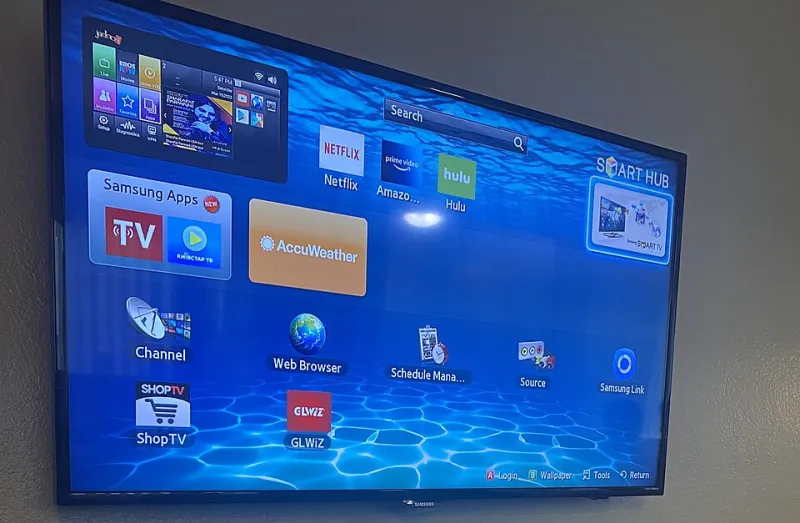
Photo: Dancingpolishcow, CC BY-SA 4.0, via Wikimedia Commons
There’s a specific kind of nostalgia attached to the old channel guide — the folded magazine insert, the scrolling grid on channel 3, the ritual of finding out that the movie you love started twenty minutes ago. The industry told us that was over. On-demand meant you’d never miss anything again, and the guide would go the way of the dial tone.
Except the guide didn’t die. It got rebuilt, rebranded, and stuffed into nearly every streaming interface in America. It just stopped calling itself a guide.
The Grid Was Never Really About the Grid
Here’s the reframe that makes all of this click: a TV guide was never a listing of what exists. It was a set of instructions for what to do next. The grid’s real function was to reduce the number of decisions between you and a show, and to make the decision feel low-stakes — because if you didn’t like it, you could flip.
That job still exists. It’s just been redistributed across a home screen. The top-ten row. The “because you watched” rail. The autoplay preview that starts talking at you before you’ve finished reading the title. The “live now” tab that nobody was supposed to care about and everybody uses.
Each of those is a scheduling decision wearing the costume of a recommendation.
Rows Are a Guide With Better Lighting
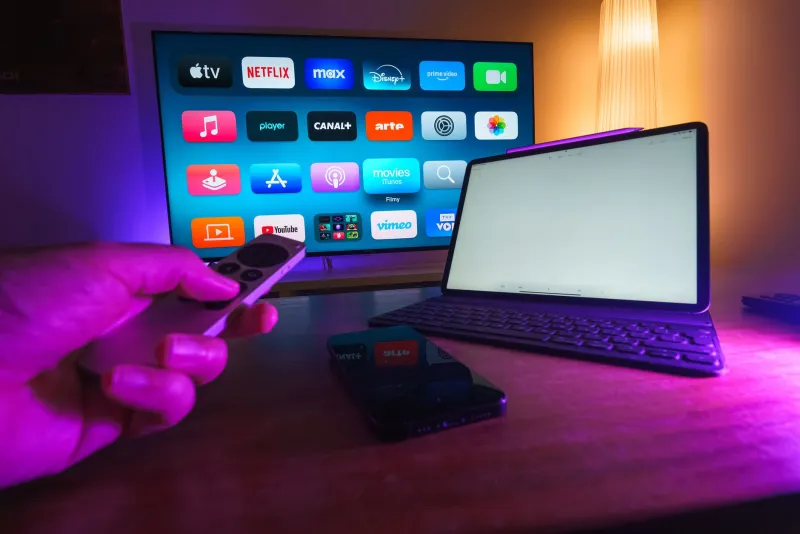
Think about how a streaming home screen actually works. There’s an order. There’s a first screen. There’s a shelf that gets prime real estate and a shelf that’s buried four swipes down. Someone chose that order, and that order is the modern equivalent of putting a show at 8 p.m. on a Thursday versus 2 a.m. on a Sunday.
That’s not a conspiracy, it’s just scheduling, and scheduling has always been editorial. The difference is that a network programmer used to answer to a standards department and a public schedule grid. Now the programmer is a ranking model, and the only public signal is what shows up in the top row.
Which is why the ten-most-popular lists matter more than they have any right to. They’re the closest thing streaming has to a shared cultural schedule — the one place where everyone in the country can see the same ordering at the same time and feel like they’re watching television with other people.
Your Favorite ’90s Channel, Now With a QR Code
The loudest evidence that the guide survived is the FAST lane — free, ad-supported television. Pluto, Tubi, the Roku Channel, Samsung TV Plus, and a long list of network-owned cousins have collectively rebuilt something that looks suspiciously like cable: numbered channels, a program currently in progress, no ability to rewind unless you pay attention.
And Americans are using it. Not as a novelty, either. There’s a real psychological pull to a channel that’s already thirty minutes into something. It removes the burden of choosing, it guarantees you can’t binge eight hours in a row, and it provides the mild, pleasant friction of having missed the beginning — which somehow makes a show easier to start than starting it properly.
The important structural detail is that FAST channels are scheduled. Somebody is deciding what airs at 9 p.m. on a Tuesday, and that somebody is a mix of human curators and automated systems pulling from a library. The grid returned through the side door, and it brought commercials with it.
Autoplay Is the New Prime Time
The subtler version of scheduling is autoplay. When a show ends and the next thing starts counting down before you’ve moved, that countdown is a programming decision made on your behalf. It’s the streaming equivalent of the network lead-in, and its job is identical to the job it had in 1985: keep you on the channel.
The difference is that the old lead-in had to work for a whole audience at once. The countdown only has to work for you. That’s more efficient and, arguably, more effective. It’s also why the “are we still watching?” prompt has become a genuine cultural artifact — a moment of self-recognition that people make memes about.
Who’s Actually Programming You?
This is the part worth watching in 2026. The balance of power has shifted from the people who make shows to the systems that place them. A well-reviewed series can quietly disappear because it got slotted on the wrong shelf; a mediocre one can become a hit because a row put it in front of the right eyeballs at the right moment.
And there’s a regulatory angle warming up. Advertisers want transparency about placement. Talent agencies want to know why their clients’ shows aren’t surfacing. Regulators have started asking, gently, whether recommendation systems deserve the same scrutiny as broadcast scheduling once did. Nobody has a clean answer.
What We Lose When Everything Is Recommended
The old guide had one underrated virtue: it was finite. You could see the entire evening and know you’d seen it. Modern interfaces are infinite in the way that a hallway of mirrors is infinite, and the effect is a low hum of anxiety that you might be missing the good stuff sitting two rows and nine swipes away.
That’s why the “what’s on” instinct keeps coming back. People want edges. They want a schedule that ends. They want to be told, occasionally and confidently, that this is the thing, and it’s on now.
The guide never went away. It just stopped pretending to be neutral, and started pretending to be your friend.