The Pause Button Is a Checkout Lane Now: TV Shopping Moves Into the Stream

Photo: Shixart1985, CC BY 2.0, via Wikimedia Commons
For decades, TV advertising worked on a simple promise: interrupt the show, show the product, hope the viewer remembers it later. Shoppable TV is trying to collapse that delay. Instead of asking you to remember a brand name until you reach your phone, the ad break is now designed to hand you a button, a code, or a cart. The living room is being rewritten as a point of sale, and the remote is starting to look a lot like a cash register.
The Ad Break Is Now a Checkout Line
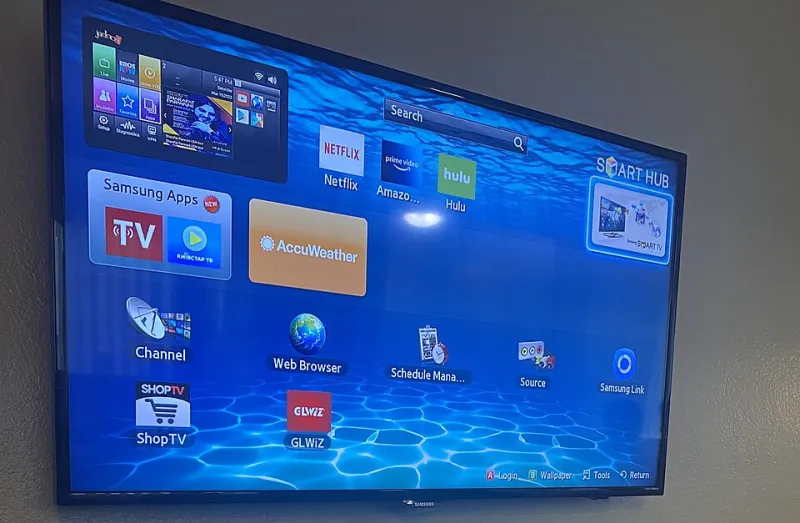
The basic idea is not complicated. A commercial appears, and so does a way to act on it. Sometimes that means a QR code on the screen. Sometimes it means a clickable overlay on a connected-TV interface. Sometimes it means a pause-screen storefront that lets a viewer browse products from the show they are watching. Retailers and streamers are testing different versions of the same thought: if people already shop on their phones during TV time, why not meet them on the biggest screen in the house?
That is the optimistic version. The less optimistic version is that every ad break becomes a low-grade infomercial with a progress bar. The success of shoppable TV depends on which version viewers end up experiencing. If the shopping layer feels helpful and optional, it can work. If it feels like the show is being held hostage by a catalog, it will get old fast.
How Shoppable TV Actually Works
There are three main flavors. The first is the interactive ad, where a viewer can press a button to learn more, save an item, or send a link to their phone. The second is the retail integration, where a platform partners with a store and lets viewers shop products tied to a specific show, season, or ad campaign. The third is the pause-and-shop feature, which turns a frozen frame into a browsing opportunity. In each case, the goal is to shorten the distance between seeing something and buying it.
Advertisers like this because traditional TV ads are hard to measure. A shoppable ad can show a click, a save, or a purchase. Platforms like it because commerce is a new revenue stream at a time when subscription growth is not the automatic win it once was. Retailers like it because connected TV reaches people in their homes, often with better targeting than a billboard or a random display ad. The whole system is built on the idea that attention is valuable, but action is more valuable.
Why Advertisers Are Betting on the Couch
The couch is a surprisingly good place to sell. People watch TV when they are relaxed, which makes them more open to suggestion than they might be at a desk. They are also already using second screens, so the behavior is not new. Shoppable TV just tries to pull some of that phone-based shopping back onto the television. For brands, that is a chance to catch a viewer at the exact moment they are interested in a product, a recipe, a piece of clothing, or a home upgrade.
There is also a practical reason. Advertising on streaming is growing, and platforms need to prove that their ad tiers are worth the money. Interactive and shoppable formats give them a story to tell: this is not just an impression, it is a transaction. Whether that story holds up at scale is another matter. A click is not a sale, and a sale is not a loyal customer. Advertisers know that. But in a crowded market, any measurable step closer to the checkout is attractive.
The Privacy Aisle
Shoppable TV raises the usual privacy questions, only with a retail receipt attached. To make these ads work, platforms and advertisers need to connect viewing data with shopping data. That can mean household-level targeting, purchase matching, or automatic content recognition. In plain English: the TV may know more about what you watch and what you buy than you think. Regulators and privacy advocates are already paying attention, and viewers are increasingly sensitive about how much of their living-room behavior gets packaged and sold.
The industry will likely respond with opt-outs, clearer disclosures, and promises that everything is anonymized. Some of that will be genuine. Some of it will be marketing. The real test is whether viewers feel like they are being served or studied. If the shopping layer feels like a helpful shortcut, people may tolerate it. If it feels like the TV is snooping through the shopping bag, they will push back.
Viewer Patience Is the Real Inventory
The biggest risk to shoppable TV is not technology. It is annoyance. Americans already deal with more ads on streaming than they expected a few years ago. Adding a buy button to every break could make the experience feel cheaper, not smarter. The format works best when it is sparse, relevant, and easy to ignore. A QR code that appears for a few seconds is one thing. A permanent storefront crowding the screen is another.
There is also the question of whether people actually want to buy from their couch. The answer is probably yes, sometimes. A viewer might scan a code for a jacket, save a product for later, or order the same snack they see on screen. But most people are still watching TV to relax, not to run errands. The winning version of shoppable TV will feel like a shortcut, not a second job.
The Remote as Cash Register
The remote is not fully a cash register yet. It is more like a trial run. Streamers, retailers, and advertisers are all circling the same opportunity, and the next few years will determine how much of it sticks. If shoppable TV can stay useful without turning every show into a sales floor, it might become a normal part of the ad break. If it cannot, viewers will do what they have always done when TV gets too pushy: they will find the mute button, the skip button, or the exit.